Wandernest
Here at Wandernest, we are on a wonderful discovery journey to reveal the beauty of Northeast India. Today, we are here to let you discover the beauty of Agartala, the capital city of one of the seven sister states, Tripura.
The tale of Agartala, shaded away by the River Haora, is intertwined with the Manikya Dynasty and the regal state of Tripura. The fusion of ancient customs with colonial impact has created a peculiar yet soothing cultural scenery that appeals to the soul. Although these locations are rarely included in popular travel guides, the city’s vast historical sites, sanctuaries, and spiritual places tell every curious visitor its rich story. These are the beautiful yet peaceful places to see in Agartala. There are so many things to do in Agartala, and you can explore them through this post.
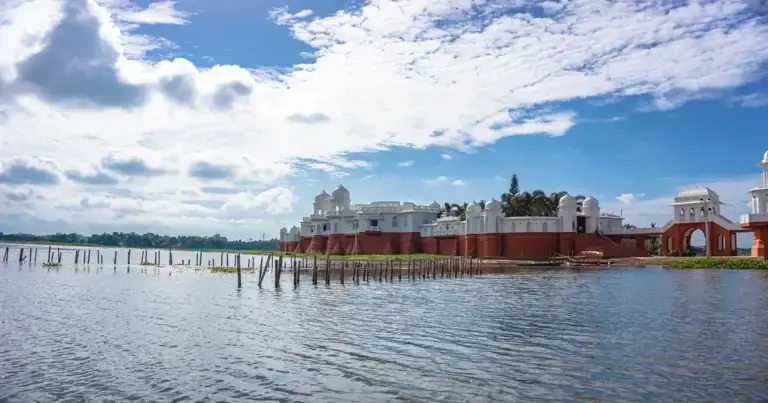
Table of Contents
Toggle1. Step Back in Time: The Grandeur of Ujjayanta Stately Home
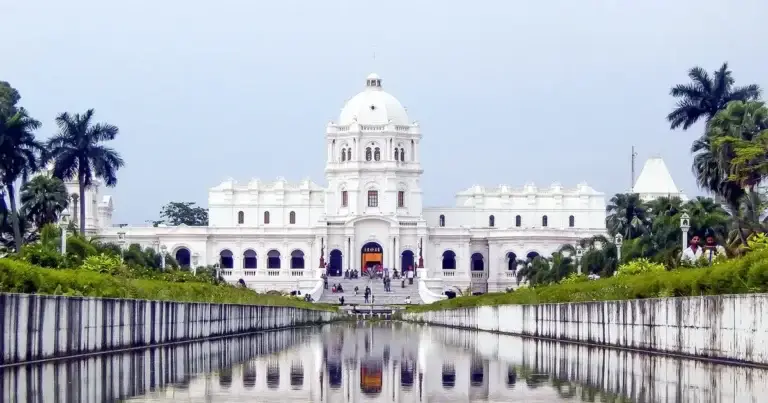
Anticipate stepping into a fairytale, and you’re close to visualising Ujjayanta stately home. This pretty prehistoric stately home in the centre of Agartala is an amazing example of a special style of architecture that combines Indian and Middle Eastern designs.
The stately home was named “Ujjayanta” by renowned novelist Rabindranath Tagore, who was a visitor of the majestic family. He gave it this name, which is a pleasing and significant one. As you stroll through the stately home, you’ll be astounded by its alluring components, shimmering tiled floors, intricate wooden carvings on the ceilings, and doors that tell stories of a lavish past.
The stately home is a heavenly mix of contradictory architectural styles, including Mughal, British, and provincial designs, with three tall domes that stand out as a trademark. The green lawns outside are a spiritual place, with musical cascades and stately lakes that reflect the stately home’s heavenly beauty.
The Stately Home is now a habitation for the Tripura State assemblage, which exhibits a large collection of antiques, statuettes, and records that tell the story of Tripura’s biography and civilisation. Each and every part of the assemblage is a passage across different periods of time, with showcases varying from prehistoric Buddhist sculptures and figures to displays of native art and heritage.
- Where to find it: Right in Agartala City Center
- When to visit: Generally 10:00 AM to 5:00 PM (Heads up: it’s closed on Mondays!)
- A small fee applies to enter.
2. A Dream on Water: The Mystical Neermahal Palace
Venture just about 53 kilometres from Agartala, as well as prepare to be utterly enchanted by the Neermahal Stately home. This breathtaking “Water Palace” is a sight to behold, truly unique in Northeast India, as well as holding the distinction of being only the second water Stately home in the entire country, after Udaipur’s Jag Mandir.
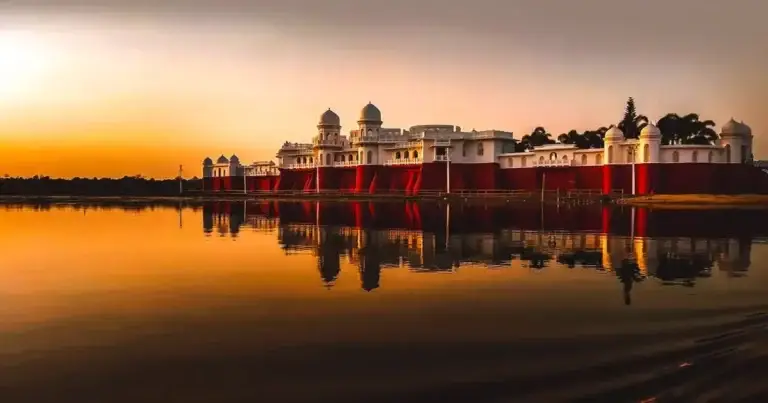
Constructed by King Bir Bikram Kishore Manikya in 1921, Neermahal was the majestic family’s personal summer escape, and its location, settled in the clear embrace of Rudrasagar pond, uprises its charm to an almost elegant level. It’s no wonder it’s a crown jewel of Agartala sightseeing.
The Stately home thoughtfully divides into two distinct realms: the “as well asar Mahal” to the west, reserved for the majestic family’s private moments, as well as the “Baithak” to the east, where the King would host guests as well as conduct magnificent communal functions.
Its architecture is a dramatic symphony of Mughal as well as Hindu styles, adorned with charming balconies and elegant pavilions, as well as delicate jharokhas (hanging enclosed balconies). The vibrant red as well as the stone construction, set against the calm blue of the pond, creates a visual spectacle, especially as the sun paints the sky at sunrise as well as sunset.
Getting to Neermahal is an adventure in itself – an attractive boat ride across Rudrasagar pond. This journey offers stunning panoramic views of the Stately home as you approach, building anticipation with every ripple. as well as if you visit in winter, the pond becomes a vibrant sanctuary for migratory birds, transforming the area into a birder’s paradise.
As night falls, don’t miss the captivating light as well as sound show that brings the biography of the Manikya dynasty as well as the Stately home’s construction to life – an expertise that truly adds a Mystical touch.
- How to get there: Located in Melaghar (Rudrasagar pond), roughly 53 km from Agartala
- When to visit: Accessible during daylight hours by boat.
- Entry to the Stately home as well as the boat ride both have a fee.
3. A Journey for the Soul: Tripura Sundari Temple (Matabari)
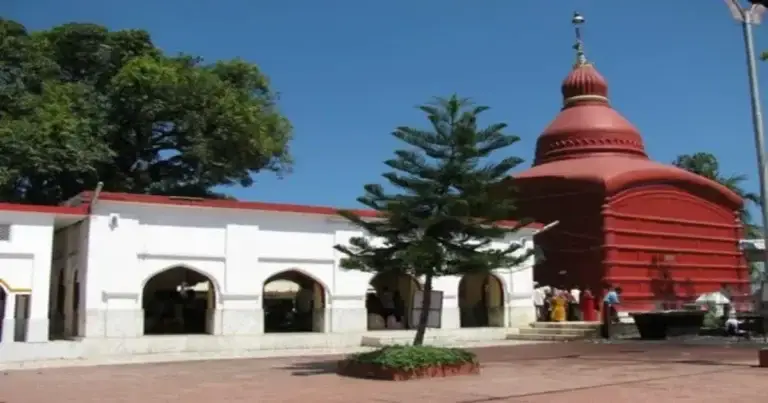
For those seeking a moment of spiritual absorption and a connection to Historic faiths, the Tripura Sundari Temple is a must-stop on Agartala’s sacred trail. Approximately 55 km from Agartala in Udaipur, this temple holds huge significance as one of bharat’s 51 Shakti Peeths – a sacred pilgrimage site for devotees across the country. Myth has it that the right foot of Goddess Sati descended upon this very ground, making it truly respected.
Constructed in 1501 A.D. by King Dhanya Manikya, the Spiritual place is devoted to Goddess Tripura Sundari, an embodiment of Goddess Sati. Its building follows the conventional Bengali ek-ratna (single spire) style, resembling a tortoise shell, which gives it the unique name “Kurma Peeth”. The Spiritual place’s bright atmosphere and deep historical roots draw swarms of pilgrims and curious tourists alike.
Within the compound, a large holy pond, Kalyan Sagar, teems with various fish and tortoises, adding to the peaceful atmosphere. You’ll often see devotees joyfully feeding the fish and offering prayers – a Beautiful native custom.Beyond its sacred significance, the Spiritual place is a lively hub of indigenous heritage and devotion.
During celebrations like Diwali, the complex bursts with energy, hosting vibrant fairs and special pujas that attract massive crowds. Its spiritual attraction, combined with its simple architectural beauty and hereditary environment, gives a truly heartfelt experience for each and everyone.
- Location: Udaipur (Approximately 55 km from Agartala)
- Visiting Hours: Open daily from sunrise to sunset (times might shift slightly during seasons/celebrations)
- No entry fee, but donations are fanatically valued
4.Embrace the Wild: Sepahijala Wildlife Sanctuary & Zoological Park
Calling all wildlife lovers and nature enthusiasts! The Sepahijala Wildlife Sanctuary and Zoological Park is an absolute must-add to your Agartala sightseeing. Just about 28 kilometres outside the city, this lounge oasis extended over 18.5 square kilometres, fragmented with a rich distinctiveness of plants and animals.
It’s more than just a wildlife reserve; it’s a complete landscape experience, featuring a botanical green yard, a peaceful heavenly pond (Amrit Sagar), and a zoo, offering endless activities for everyone.Numerous animals, including the Phayre’s Langur, a primate species exclusive to Northeast India, as well as different deer, civets, wild boars, and fascinating reptiles, call the sanctuary home.
It is renowned for its amazing biodiversity. The zoo within the sanctuary plays a crucial role in wildlife conservation and education, giving visitors a chance to observe many of these magnificent creatures up close.Wannabe photographers and nature buffs will adore the botanical green yard, a vibrant collection of local and international plant species.
At Amrit Sagar pond, you can enjoy peaceful boat rides, drenched in the bright environment, and find various birds. The wildlife reserve is also a main spot for birdwatching, attracting both migratory and inhabitant feathered friends. The existence of rubber and coffee plantations further enhances the region’s ecological drapery.
A visit here is an enjoyable break from historical observations, offering a calming chance to reunite with nature and witness the area’s unique wildlife.
- Location: Sepahijala (Around 28 km from Agartala)
- Visiting Hours: 9:00 AM to 5:00 PM (Note: Closed on Fridays)
- Entry fees apply, with additional charges for boating/zoo access.

5. A Glimpse of Dignity: Kunjaban Palace (Raj Bhavan)
While Ujjayanta palace convey to you a gigantic majestic past, Kunjaban Palace, now functioning as the official Raj Bhavan (Governor’s Residence), presents a contrasting yet no less relevant vision of Agartala’s true landmarks. Located just about 1 kilometre north of Ujjayanta Stately home, this elegant structure was built in 1917 by Maharaja Birendra Kishore Manikya.
Rabindranath Tagore once more provided it with the name “Kunjaban”, which translates to “a garden of creepers and trees”, aptly capturing its beautiful scenery.The Palace boasts an outside as well as a light atmosphere due to its beautiful blend of both European and original Bengali architectural styles.
Its high standpoint gives you a beautiful bird’s-eye view of segments of the city, and the greenery surrounding it gives an absolutely bright environment.For tourists, Kunjaban Stately home offers an opportunity to enjoy its genuine meaning and architectural grandeur from afar.
While it may not offer interactive tours like Ujjayanta Stately home, its organic beauty and the authentic narrative it represents make it a significant addition to any exploration of Agartala’s rich heritage.It’s a lovely spot for a quiet drive-by or a quick stop to appreciate its dignified appearance.
- Location: Within the Ujjayanta Stately home grounds, Agartala
- Visiting Hours: Exterior viewing is typically possible during daylight hours.
- No fee for outside viewing.

6. Architectural Harmony: Jagannath Temple
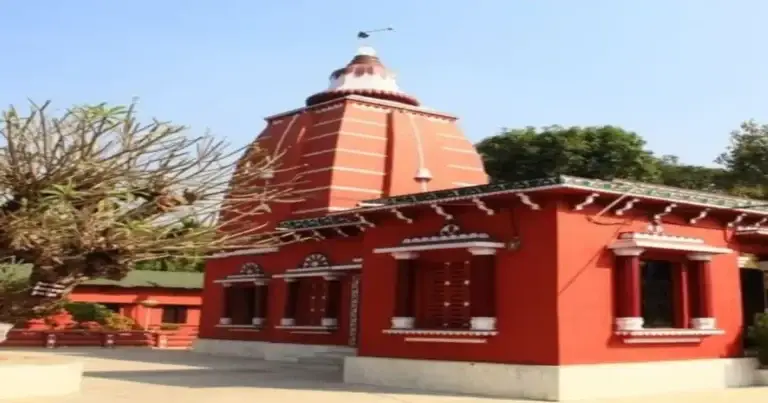
Among Agartala’s important religious sites, the Jagannath Temple is truly special, not only for its spiritual vibrance but also for its distinctive architectural design. Located within the palace complex, this temple, dedicated to the revered Hindu deities Jagannath, Balabhadra, and Subhadra, was constructed in the 19th century by Maharaja Manikya II.
Its fascinating blend of Mughal and traditional Bengali architectural elements makes it a compelling stop for Agartala sightseeing.The temple’s structure features the charchala (four-sloped roof) style, a common characteristic of Bengali temple design, yet here it’s combined with a unique floor plan.
The bright orange shrine, which is beautifully carved and features a tall shikhara (spire), is a visual treat, making a strong contrast with the surrounding area. You’ll find stone lions, which are classic temple architecture symbols of guardianship, which guard the entrance in most cases.This sacred place is a lively hub for local devotees, especially during major Hindu celebrations, when it bursts with energy, prayers, rituals, and colourful celebrations.
During normal times, its serene atmosphere offers an ideal space for contemplation and appreciating the dainty, authentic mastery. Visitors can witness local religious traditions and gain a deeper insight into Agartala’s spiritual life.
- Location: Palace Complex, Agartala
- Opening Hours: Daily from morning to evening (with breaks for rituals).
- No admission fee, but contributions are gratefully accepted.
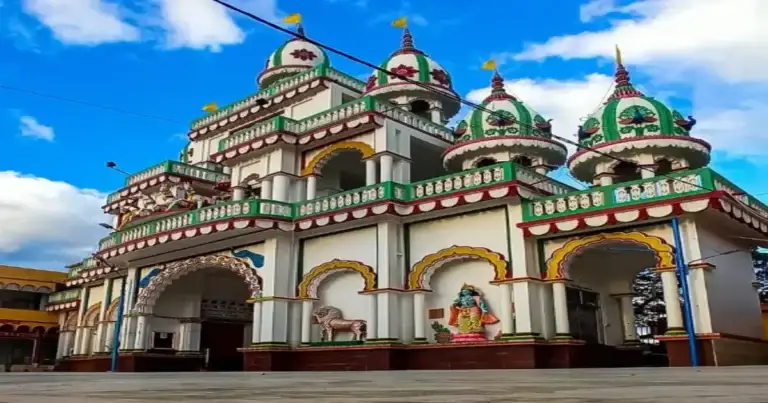
7. A Sanctuary of Peace: Buddha Temple (Benuban Vihar)
Completing our handpicked list of Agartala’s visiting places is the beautifully serene Buddha Temple, or Benuban Vihar. Being one of Tripura’s most ancient Buddhist temples, located in the north of Agartala, it provides a peaceful retreat from the soft hum of the city. It stands as a significant spiritual landmark for Buddhist followers and a tranquil haven for tourists, revealing yet another facet of Agartala’s diverse charm.
Dating back to the early 20th century, Benuban Vihar is home to a beautiful metal icon of Lord Buddha, which was brought all the way from Burma. The sacred place’s architecture is elegantly simple yet profoundly beautiful, constructed primarily of wood and designed to inspire relaxation and self-absorption.
The carefully maintained grounds, with their lush greenery and monastic buildings, are perfect for meditation and quiet scrutiny. Unlike the often elaborate Hindu sacred places, its understated beauty fosters a powerful sense of spiritual harmony.For visitors, the Buddha sacred place offers a unique opportunity to connect with Tripura’s Buddhist Tradition and experience a moment of mystical calm.
It’s an area where you can sit back silently and watch the monks going about their daily rituals, meditate, or just soak up the profoundly soothing atmosphere. The sacred place complex is a lovely example of Agartala’s religious diversity and its wonderfully tolerant, honest fabric.
Unveiling the Charm of Agartala
Agartala, with its captivating blend of royal history, breathtaking landscapes, and vibrant culture, is truly a distinctive experience for any traveller. From the majestic splendour of Ujjayanta Palace and the tranquil beauty of Neermahal to the sacred aura of Tripura Sundari Temple and the rich biodiversity of Sepahijala Wildlife Sanctuary, the sights to see in Agartala weave a rich tapestry of attractions.
By choosing to explore these remarkable Agartala tourist attractions, you’re not just taking a trip; you’re embarking on a heartfelt journey that will reveal the very soul of Tripura. So, pack your bags, prepare to be utterly mesmerised, and dive into the peaceful charm and rich history that eagerly await you in Agartala. Your unforgettable Agartala sightseeing adventure begins right here!
Wandernest is proudly powered by WordPress